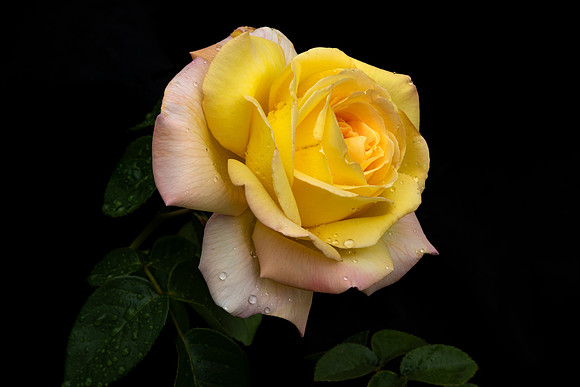
Peace
The Peace rose, formally Rosa 'Madame A. Meilland', was developed by French horticulturist Francis Meilland, in the years 1935 to 1939. When Meilland foresaw the German invasion of France, he sent cuttings to friends in Italy, Turkey, Germany, and the United States to protect the new rose. It is said that it was sent to the US on the last plane available before the German invasion, where it was safely propagated by the Conard Pyle Co. during the war.
In early 1945 Meilland wrote to Field Marshal Alan Brooke (later Viscount Alanbrooke) to thank him for his key part in the liberation of France and to ask if Brooke would give his name to the rose. Brooke declined saying that, though he was honored to be asked, his name would soon be forgotten and a much better and more enduring name would be "Peace".
The adoption of the trade name "Peace" was publicly announced in the United States on 29 April 1945 by the introducers, Conard Pyle Co. This was the very day that Berlin fell, a day considered a turning point in the Second World War in Europe. Later that year Peace roses were given to each of the delegations at the inaugural meeting of the United Nations in San Francisco, each with a note that read:
"We hope the 'Peace' rose will influence men’s thoughts for everlasting world peace".
By 1992, over one hundred million plants of this hybrid tea had been sold.
Wikipedia